The Steinerner Saal: Zimmermann’s ceiling and Cuvilliés’ room
The Steinerner Saal runs through the centre block of the palace, and everything either side of it was built to lead there. Johann Baptist Zimmermann painted the ceiling frescoes. François de Cuvilliés did the decoration. Those two names together are the reason this room, rather than the front elevation, is what people remember.
The ceiling
Zimmermann is the fresco painter Bavaria sends for when a ceiling has to carry a room, and this is one of the ceilings he is judged on. Look up before you look around: the hall is designed so that the painted surface is the first thing to register and the architecture underneath it is the second. What the frescoes depict in detail is a longer conversation than the operator publishes, and this site does not invent one. It is the half hour a guide is for, and the desk does not sell one.
Cuvilliés did the rest of it
François de Cuvilliés is the other name on this room, and the pairing matters: a fresco painter and a decorator working the same space is how Bavarian rococo interiors were actually produced. His work is also the connecting thread between this palace and the one in the city centre, where the theatre carries his name. That is not a small point when you are choosing between the two, and it is taken up on Residenz or Nymphenburg.
The building the hall sits in
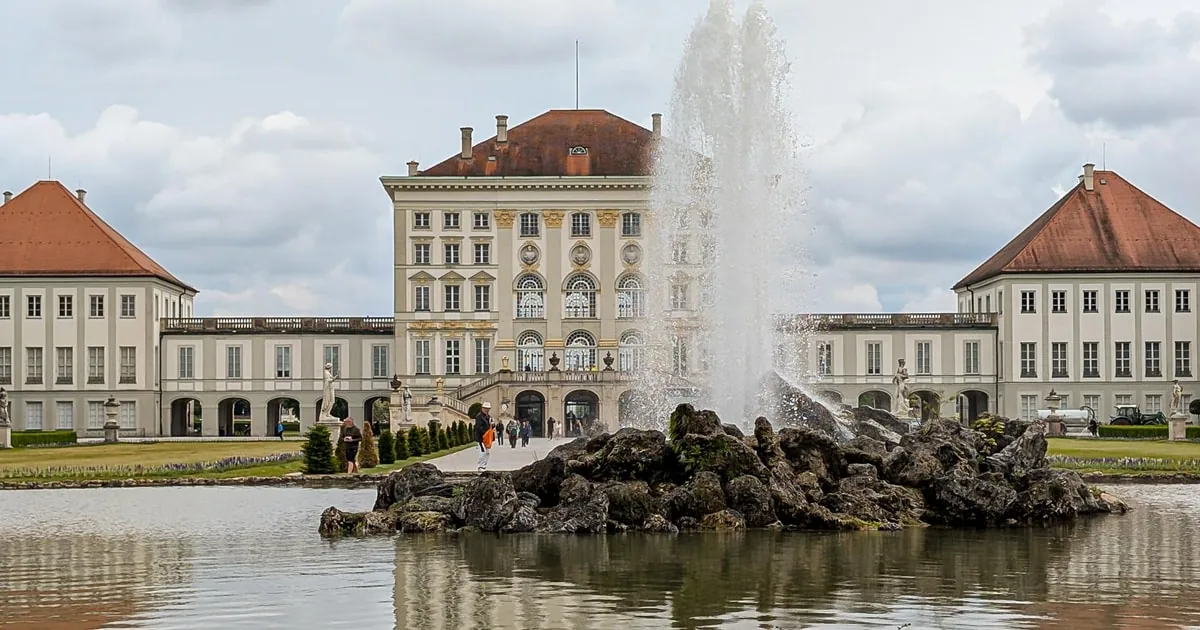
Construction began in 1664 for the electoral couple Ferdinand Maria and Henriette Adelaide of Savoy, after the birth of their son Max Emanuel. Agostino Barelli was the first architect and was replaced in 1674 by Enrico Zuccalli. Max Emanuel then extended the palace systematically from 1701, which is how a villa became a front that Wikipedia gives as 632 metres wide. That figure is that source’s and is attributed here rather than asserted.
Stand in the middle of the hall rather than at one end. The room was laid out to be read from its centre, with the garden on one side and the courtyard on the other, and the ceiling resolves from there in a way it does not from the doorway.
Getting under it
The palace single ticket, at under ten euros, or the combination ticket if you also want the coaches, the porcelain and the park palaces. Under-18s pay nothing. Six of the twelve listings this site tracks reach the palace interior, and the one led by an architect is the only one that says in its own inclusions that “Tickets are not included”, which for this room is a fair trade if what you want is the building explained rather than the queue skipped.
 Tickets NOT included
Nymphenburg Palace Reimagined (Max. 12 guests)
 Palace + carriages
Munich Nymphenburg Palace & Carriage Museum Fast-Track Tour
 Private, six languages
Munich: Nymphenburg Palace Skip-the-Line Private Guided Tour
The rest of the interior is on what you actually walk through, and the portraits in the southern pavilion are on the Gallery of Beauties.
Frequently asked questions
What is the Steinerner Saal at Nymphenburg?
The great hall running through the centre block of the palace, with ceiling frescoes by Johann Baptist Zimmermann and decoration by François de Cuvilliés. It is covered by the palace ticket and by the combination ticket; see tickets and what they cover.
Who painted the ceiling at Nymphenburg Palace?
Johann Baptist Zimmermann painted the ceiling frescoes of the Steinerner Saal, and François de Cuvilliés was responsible for the decoration of the room. Neither is explained by a guide at the door, because the operator states there are no regular guided tours — only an audio handset. The listings that supply a live guide are on every tour we list.
Is the great hall included in the ordinary ticket?
Yes. It is inside the palace, so the palace single ticket reaches it and so does the combination ticket, which also opens the Marstallmuseum, the porcelain museum and, in season, the four park palaces. Opening hours differ by season and last entry is thirty minutes before closing: hours by season.