What is Nymphenburg Palace famous for?
Four things, and a name that outgrew the building. A great rococo hall frescoed by Johann Baptist Zimmermann. A room of thirty-six commissioned portraits. One of Europe’s great collections of state coaches. And a two-hundred-hectare park that is free to walk. The name itself is famous separately, on porcelain, and the museum for that is on the same ticket.
A summer palace that kept growing
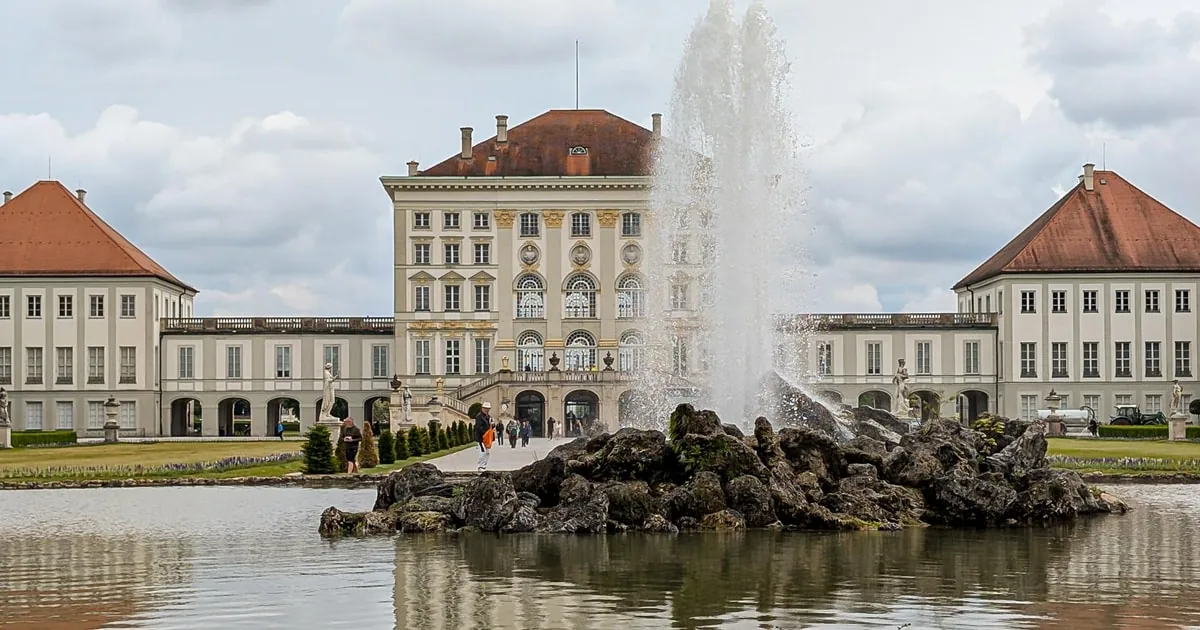
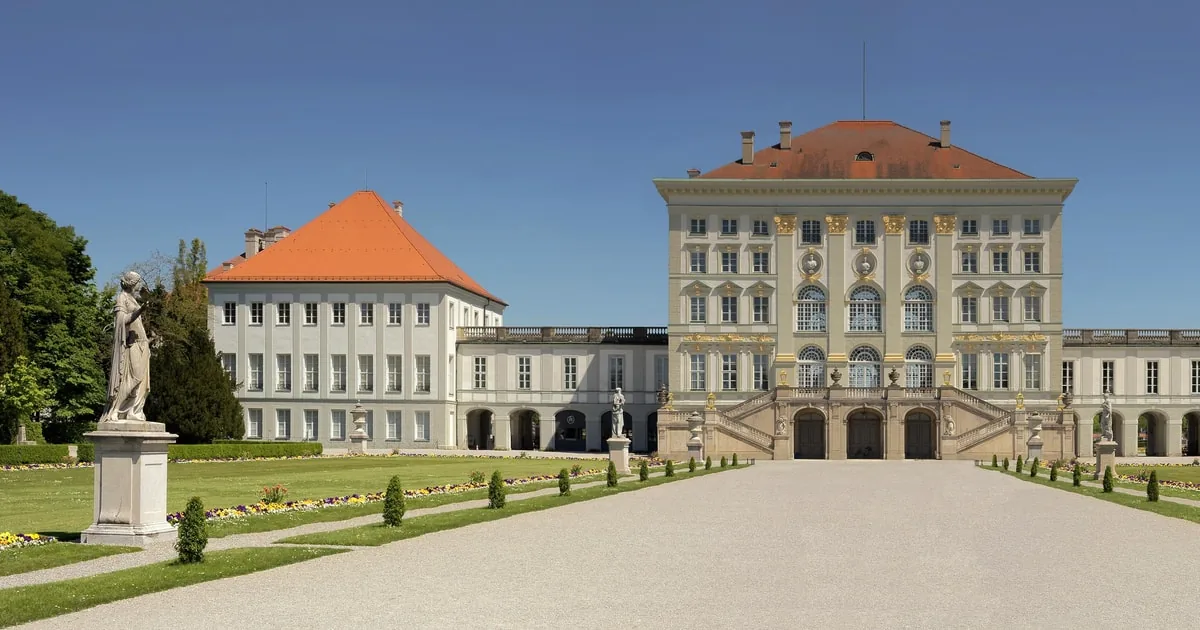
Construction began in 1664 for the electoral couple Ferdinand Maria and Henriette Adelaide of Savoy, after the birth of their son Max Emanuel. Agostino Barelli was the first architect; Enrico Zuccalli replaced him in 1674. Max Emanuel then extended the place systematically from 1701, and that is how a villa in the fields west of Munich became a front that Wikipedia gives as 632 metres wide. That figure is that source’s and is repeated here as theirs.
It is the picture that sells the place, and it is free to stand in front of.
The rooms it is known for
- The Steinerner Saal. Ceiling frescoes by Johann Baptist Zimmermann, decoration by François de Cuvilliés, running through the centre block. The great hall.
- The Gallery of Beauties. Thirty-six portraits commissioned by Ludwig I from Joseph Karl Stieler, in the inner southern pavilion. The Gallery of Beauties.
- The Queen’s bedroom. Where Ludwig II was born on 25 August 1845. Born here.
- The Marstallmuseum. One of Europe’s great coach collections, in the south wing of the former royal stables, with the porcelain museum beside it. The coaches and the porcelain.
The name on the porcelain
For a good many people Nymphenburg is a mark on a piece of porcelain before it is a palace on the edge of Munich, and the Museum of Nymphenburg Porcelain sits in the same building as the coaches and on the same combination ticket. It is the part of the estate that most often surprises visitors who bought the ticket for the state rooms and then found two more museums attached to it.
The park, which is the half nobody charges for
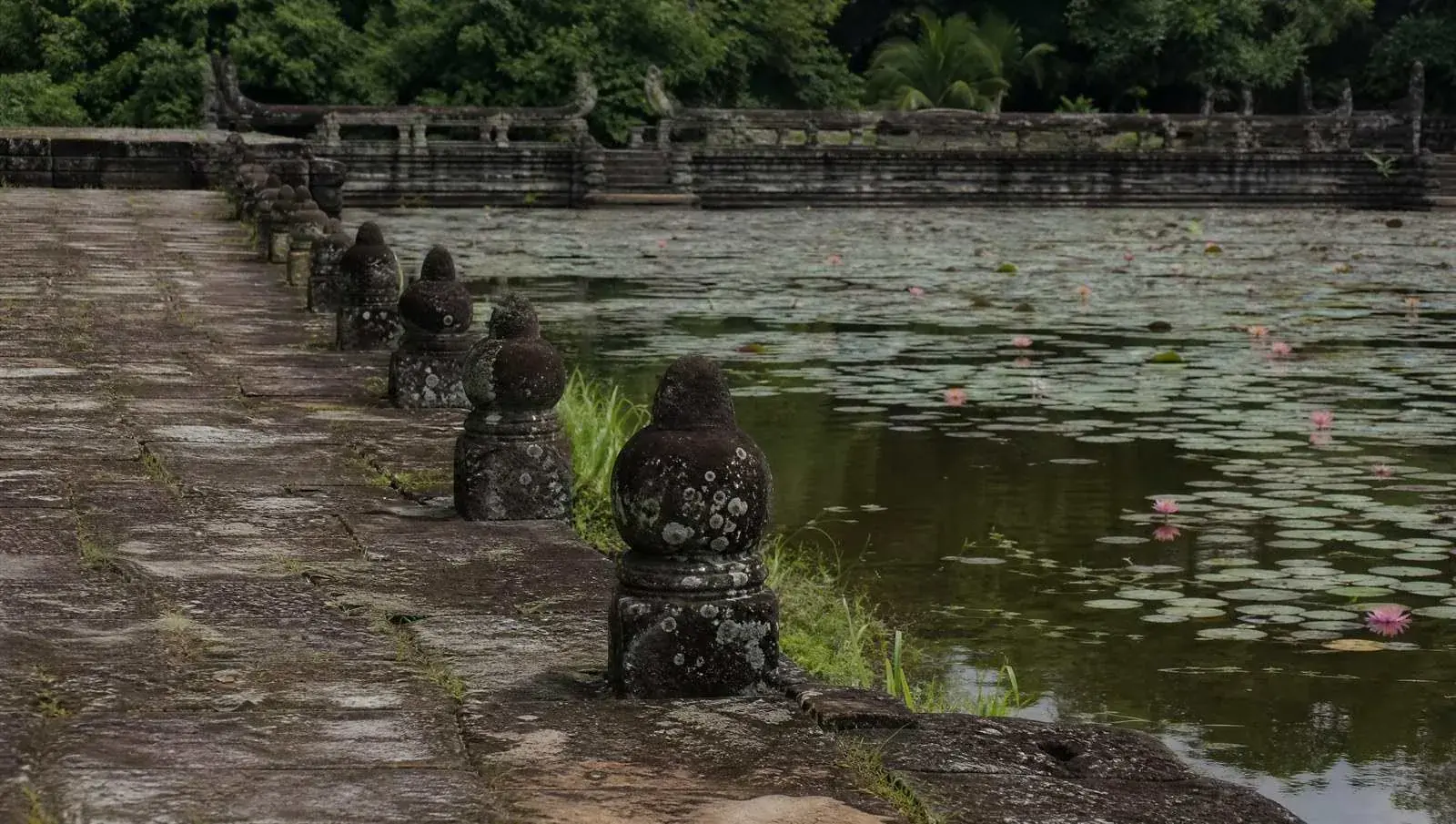
Two hundred hectares, formal near the building and landscaped further out by Friedrich Ludwig von Sckell in the early nineteenth century, with four small palaces standing in it: the Pagodenburg of 1716–19, the Badenburg of 1719–21, the Magdalenenklause of 1725–28 and the Amalienburg of 1734–39. The park is free, all year, from six in the morning. The four pavilions are ticketed and shut from 16 October. The park and its four pavilions.
And one thing it is quietly notorious for
Having no guided tours. The Bavarian Palace Administration publishes the sentence on its own opening-hours page: “There are no regular guided tours.” At the state palace an hour up the road the admission ticket entitles you to join one. Here the ticket buys rooms and, for a few euros, an audio handset. Every guided listing at this address exists because of that sentence, and the best-rated of them supply exactly the voice the ticket leaves out. How the palace weighs up, and for whom.
If somebody has told you Nymphenburg is famous for being wider than Versailles, that comparison belongs to the source that makes it rather than to the palace. What the operator and the record actually support is a frontal width figure, and this site attributes it rather than boasting with it.
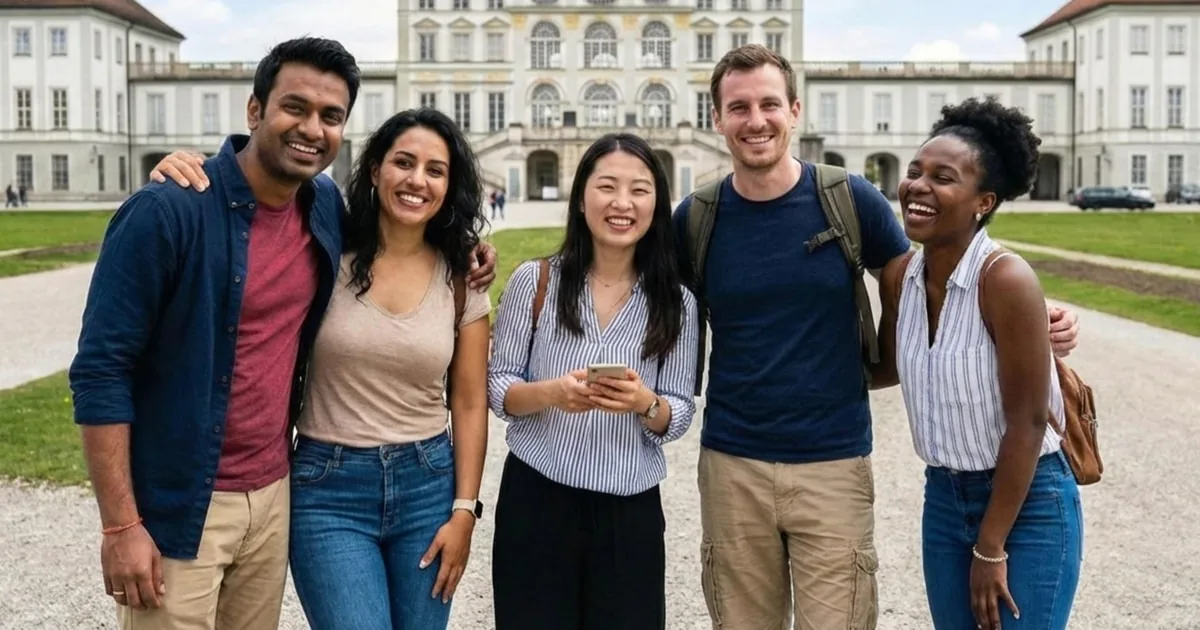 Palace + carriages
Munich Nymphenburg Palace & Carriage Museum Fast-Track Tour
 Tickets NOT included
Nymphenburg Palace Reimagined (Max. 12 guests)
 Most booked
Munich: Nymphenburg Palace Entry Ticket
How it compares with the other famous palace in this city is on Residenz or Nymphenburg, and what you actually walk through is on what you walk through.
Frequently asked questions
What is Nymphenburg Palace famous for?
The Steinerner Saal, with ceiling frescoes by Johann Baptist Zimmermann and decoration by François de Cuvilliés; the Gallery of Beauties, 36 portraits commissioned by Ludwig I from Joseph Karl Stieler; one of Europe’s great coach collections in the Marstallmuseum, with a porcelain museum beside it; and a two-hundred-hectare park that is free to walk. what you walk through.
What is special about Nymphenburg Palace?
That so much of it is not the palace. The combination ticket covers a coach museum, a porcelain museum and four small palaces in the grounds as well as the state rooms, and behind all of it lie two hundred free hectares landscaped by Friedrich Ludwig von Sckell. What the ticket costs and covers is on the tickets page.
When was Nymphenburg Palace built?
Begun in 1664 for the electoral couple Ferdinand Maria and Henriette Adelaide of Savoy, after the birth of their son Max Emanuel. Agostino Barelli was the first architect and was replaced in 1674 by Enrico Zuccalli; Max Emanuel extended the palace systematically from 1701. The four park palaces followed between 1716 and 1739 — see the park and its pavilions.